Katsura Imperial Villa was first constructed in 1615 by Prince Toshihito of the Hachijō family. He built the Koshōin, and later his son, Prince Toshitada, continued the project by adding the Chūshōin, Shingoten, Gepparō, Shōkintei, Shōkatei, and Shōiken. There is no definitive evidence that Kobori Enshū (1579–1647) was directly involved in designing the garden, though he is believed to have offered advice to the Hachijō family. The villa as we see it today was completed in 1662.
 |
| Cycad at Sotokoshikake |
Sotokoshikake is a small waiting hut where guests once sat while the host prepared tea. Cycads were planted here, creating a distinctive atmosphere. It may be a matter of taste, but this spot feels like a unique microcosm unlike any other place in the villa.
 |
| Suhama / Sea and a lighthouse |
After passing Sotokoshikake, we walked along the edge of the pond and arrived at Shōkintei, the most important tea hut in the villa. The blue‑and‑white checkered sliding doors (fusuma) are famous. Their colors have faded over time, but the original hues were vivid.
 |
| Shokintei |
 |
| tokonoma alcove |
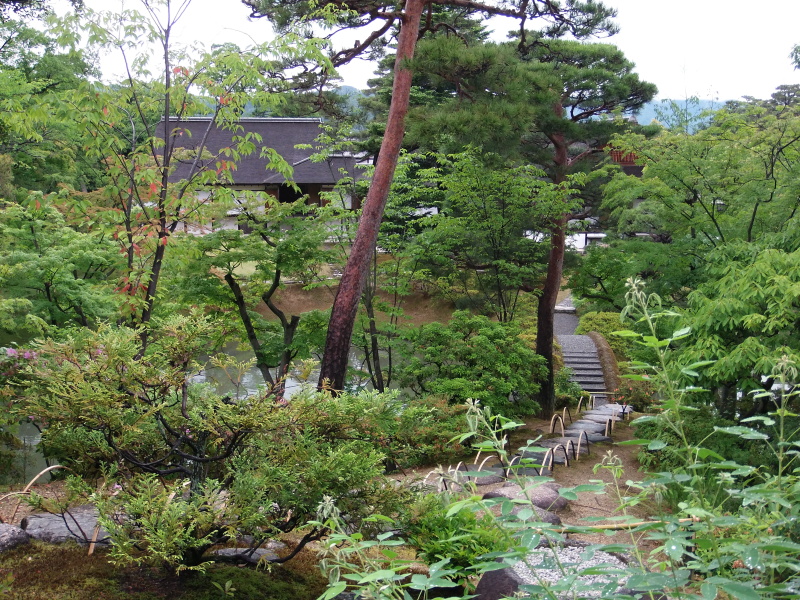
Crossing a small stone bridge and climbing a gentle slope, we reached Shōkatei, a small and simple tea hut. From here, one can enjoy a variety of scenes—waterside views, hillside landscapes, and vistas reminiscent of beaches or mountains. The delicacy and artistry of the design are overwhelming.
 |
| Shokatei |
 |
| from Shokatei |
 |
| Shoiken |
 |
| Shoiken |
 |
| Gepparo |
The interior of each room is meticulously designed, down to the smallest detail.
 |
| Shoiken |
 |
| Koshoin |
 |
| Shingoten and Gakkinoma |
The Koshōin, Chūshōin, and Shingoten were built sequentially over the first fifty years, arranged in a wild‑goose formation. The stepping‑stones are intentionally placed in irregular patterns, encouraging visitors to walk with awareness and composure.
 |
| stepping stones at Koshoin |
 |
| from Gapparo |
If possible, I would love to visit again someday.




Comments
Post a Comment