Posts

Showing posts with the label books

Literary Walk in London

Image
Once, Chelsea lay outside London. Thomas More had a large residence there, and I imagine it may have stood where Chelsea Old Church stands today. In the film A Man for All Seasons , More travels back and forth to Westminster by a small boat on the Thames.     Chelsea Old Church Thomas More's Statue Battersea Bridge If you cross Battersea Bridge near Chelsea Old Church to the south bank of the Thames and turn right, you come to Battersea Church Road. In The Forgotten Garden by Kate Morton, the orphaned twins Eliza and Sammy lived here in a tiny, dark, damp room above the Swindells’ bottle shop, working like servants. One day they played the “Jack the Ripper” game. Eliza walked toward the Thames, turned around, and Sammy had vanished. Today, Battersea Church Road is a quiet residential street, and nothing remains of the world described in the novel.     Battersea Church Road The Thames from Battersea Church Road   Jake lived in the attic...

Memories of a Geisha

Image
Memoirs of a Geisha , published in 1997, tells the story of a geisha born in a poor fishing village in northern Kyoto toward the end of the Taishō period. Its author, Arthur Golden, studied Japanese art history, and the novel reflects that background—its portrayal of Japanese life and culture is carefully researched and convincingly drawn. I was able to read it without feeling anything was out of place. A few years ago, a young foreign woman asked me about geisha. She kept saying “geisha, geisha…,” so I replied rather coldly, “I’m not interested in geisha, and most Japanese people have probably never met or spoken with one. It’s something from the past.” At the time, I hadn’t read this book yet, and I mistakenly assumed she was referring to some old Meiji‑era novel written by a foreigner. When I finally read Memoirs of a Geisha , I realized that the book she had mentioned must have been this one. I imagine she had also seen the film adaptation. Novels about Japan written by foreigners...

An Artist of the Floating World

Image
An Artist of the Floating World , Kazuo Ishiguro’s second novel, was published in 1986 and shortlisted for the Man Booker Prize. His following novel went on to win the prize in 1989. Like A Pale View of Hills , this book again portrays a Japanese protagonist living in the aftermath of the war. Masuji Ono is a retired painter, and the story takes place around 1948 in postwar Japan. He gradually comes to realize that the failure of his younger daughter Noriko’s marriage negotiations stems from his own past. His elder daughter, Setsuko, hints at the same thing. As Ono reflects on his youth, his training, his teachers, colleagues, and pupils, the reader begins to sense that his recollections do not entirely match the memories of others. What exactly is Ono’s past? It becomes clear that he had supported Japan’s wartime ideology as an artist involved in propaganda. Ishiguro, of course, never states this directly, but allows it to emerge subtly through implication. During Noriko’s marriage m...

A Pale View of Hills

Image
A Pale View of Hills is Kazuo Ishiguro’s debut novel, published in 1982. I had never read his first two books before, so it was interesting to discover that he began his career by writing about Japanese people and postwar Japan. The story is set in Nagasaki around 1950, when people were still living with the wounds of the war and the atomic bombing, yet also sensing the coming changes of a new era. It is, in fact, the period when I was born. Etsuko, now living in England, has recently lost her elder daughter to suicide. In the wake of this tragedy, she looks back on her life in Nagasaki thirty years earlier, especially on her memories of her friend Sachiko and Sachiko’s daughter, Mariko. At that time, Etsuko was a virtuous, pregnant housewife, and her husband Jiro was a capable office worker. Jiro’s father, Ogata‑san, had come from Fukuoka to stay with them. Nearby lived Sachiko and Mariko in a small, run‑down house. Mariko, a quiet and withdrawn girl, often sees disturbing phantoms—...

Waterland

Image
Waterland is Graham Swift’s third novel, published in 1983. Although his Last Orders won the 1996 Booker Prize, many readers consider Waterland to be his finest work. The narrator, Tom Crick, is a fifty‑two‑year‑old history teacher whose wife has been arrested for abducting a baby. Living in Greenwich — the place where world time begins — he is being quietly pushed into retirement. He turns to his students and begins, “Children…,” launching a strange and unsettling series of history lessons. Tom speaks about the history of the Fens where he was born and raised, the story of his mother’s family, his youthful sexual experiences with Mary, his intellectually disabled brother Dick, the death of Freddie Parr, the French Revolution, the life cycle of eels, incest, abortion, madness, ghosts… Through this fragmented narrative, Swift explores the question of what history is , using a distinctly postmodern approach. The Fens of East Anglia were once a vast waterland. It was the Atkinson fami...

The Shadow of the Wind

Image
The Shadow of the Wind is a novel by the Spanish writer Carlos Ruiz Zafón, originally published in Spanish in 2001. It has since been translated into more than forty languages, published in over fifty countries, and, according to the author’s website, has sold more than twelve million copies worldwide. I read the English edition. In 1945, in post–Civil War Barcelona under Franco’s regime, ten‑year‑old Daniel Sempere is taken by his father to the secret Cemetery of Forgotten Books. There, Daniel is drawn to a novel titled The Shadow of the Wind and becomes fascinated by its mysterious author, Julián Carax. He reads the book quickly and is deeply moved. Daniel soon meets Clara, a beautiful twenty‑one‑year‑old blind woman who knows Carax’s works well, and he develops a romantic interest in her. One night, he encounters a faceless figure in the dark—Lain Coubert, the devil in Carax’s novel. The stranger offers Daniel a large sum of money for his copy of The Shadow of the Wind , intendin...

Snow Falling on Cedars

Image
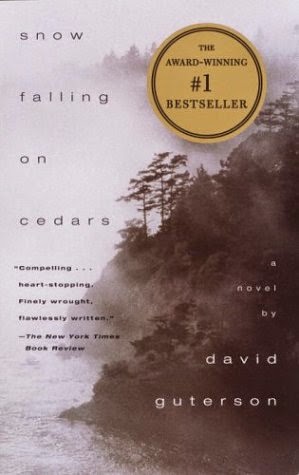
Snow Falling on Cedars is the bestselling novel David Guterson published in 1994, and it won the 1995 PEN/Faulkner Award for Fiction. The story was later adapted into a film of the same title. Because the defendant’s wife, Hatsue, was played by Yuki Kudoh, the movie attracted considerable attention in Japan. The novel was translated into Japanese in 1996, but the Japanese title, 殺人容疑 (“Suspicion of Murder”), felt disappointingly bland, and many Japanese readers were let down by it. The story takes place in December 1954 on a small island in northern Puget Sound, Washington State. Kabuo Miyamoto, a second‑generation Japanese‑American fisherman, is arrested on suspicion of murdering Carl Heine, another fisherman from the same community. A local journalist, Ishmael, watches the trial with complicated feelings. He once loved Hatsue when they were young. Their innocent relationship was torn apart after the attack on Pearl Harbor, when anti‑Japanese sentiment and racial prejudice overwhe...

The Sea

Image
The Sea , written by the Irish novelist John Banville, won the 2005 Man Booker Prize. Kazuo Ishiguro’s Never Let Me Go was among the shortlisted works that year. Banville is often praised as a master of language, yet this novel is extremely challenging for English learners. I read it twice a few years ago, and although the plot is simple and the action minimal, I still found it difficult on this third reading. The narrator, Max Morden, is a retired art historian whose wife has recently died of cancer. He returns with his daughter Claire to a seaside resort village. The dilapidated guest house where he stays was once called the Cedars. Fifty years earlier, the Grace family had rented it as a summer villa. The current housekeeper, Ms. Vavasour, now runs the place. …… And my life is changed forever. …… Half a century earlier, Max’s family spent their summers in the same village, renting a shabby cottage. One day, young Max encounters the Graces, a wealthy family also vacationing ther...

The Unlikely Pilgrimage of Harold Fry

Image
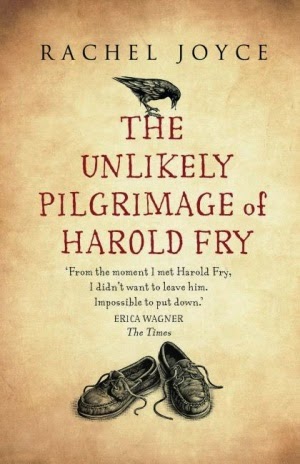
The Unlikely Pilgrimage of Harold Fry , published in 2012 and long-listed for the Man Booker Prize that same year, is the debut novel of Rachel Joyce, who had spent twenty years writing plays for BBC Radio 4. Harold Fry, sixty‑five, is a retired brewery salesman living on his pension with his wife, Maureen. His childhood was unhappy, and his naturally introverted character has kept him at a distance from other people. His marriage to Maureen has long since grown cold. One morning, Harold receives a letter from Queenie Hennessy, a former colleague he has not seen in twenty years. She writes to tell him that she is dying of cancer in a hospice in Berwick‑upon‑Tweed. Harold writes a reply, but immediately feels that a letter cannot possibly express what he wants to say. He leaves the house intending to post it, but hesitates—and keeps walking to the next postbox, and then the next. At a petrol station, he stops for something to eat and tells a young waitress about Queenie. She mentions h...

Too Much Happiness

Image
  Too Much Happiness is a collection of ten short stories published in 2009 by Alice Munro, the Canadian writer who won the Nobel Prize in Literature in 2013. I hadn’t known her name before she received the prize, but when I later found her books at a local library, I felt compelled to read her work. I’ve read Raymond Carver before, but I’m not sure I truly enjoy short stories. They often provide only minimal description and convey so much with so few words that they can feel more difficult than novels. Still, several stories in this collection offer deep reflections on life over long stretches of time.   Dimensions Doree, a chambermaid, has endured a devastating tragedy: her three young children were murdered by her mentally unstable husband. She occasionally takes the bus to visit him in prison. One day, while she is on her way there, an unexpected accident occurs…   Fiction Jon and Joyce, both highly intelligent, drop out of college and start new lives. Jon learns wo...

Of Human Bondage

Image
Of Human Bondage , published in 1915, is one of W. Somerset Maugham’s most celebrated novels. Often described as autobiographical, it is a coming‑of‑age story about a young orphan burdened by a physical deformity and a deep sense of insecurity. Philip Carey is born with a clubfoot and loses both parents at an early age. Raised by his uncle and aunt, he grows up painfully aware of his deformity. At the divinity school he becomes the target of mockery, and the experience causes him to lose his religious faith. He studies in Germany for a time, then works as an apprentice accountant, but abandons the job after a year and moves to Paris to study art. Eventually he realizes he lacks real artistic talent and returns to London, deciding to follow in his father’s footsteps and become a doctor. One day he meets Mildred, a café waitress, and falls hopelessly in love with her. Mildred is calculating and self‑interested; she uses Philip whenever it suits her. His love for her is unrequited and ul...

The Sense of an Ending

Image
The Sense of an Ending , written by Julian Barnes, won the Man Booker Prize in 2011. Tony, Colin, and Alex are close friends in high school. One day a new student, Adrian, joins their class. He is intelligent, philosophical, and soon becomes part of their group. In history class, the boys challenge their teacher, Old Joe Hunt, when he asks them what history is. This question becomes one of the central themes of the novel. After graduation, the friends promise to stay close, but their lives diverge. Adrian wins a scholarship to Cambridge. Tony studies history at Bristol and begins dating a mysterious young woman named Veronica. He later introduces her to his friends in London. Yet Tony remains uncertain about her and eventually ends the relationship. Not long after, Tony receives a letter from Adrian asking for his permission to date Veronica. Feeling betrayed, Tony replies with a spiteful letter—one that will haunt him for decades. Some time later, Adrian commits suicide, leaving beh...

Mrs Dalloway

Image
Mrs Dalloway is one of Virginia Woolf’s masterpieces and was first published in 1925. Many readers consider it one of the greatest novels of the twentieth century. The story follows a single June day in 1923 as Clarissa Dalloway prepares for her evening party in London. Woolf portrays the stream of consciousness of Clarissa and several other characters in long, fluid passages that move like flowing water. Because of this style, the novel can be challenging for English learners; I managed to read it by using the Japanese translation alongside the original. The novel opens with the famous line: “Mrs Dalloway said she would buy the flowers herself.” Peter Walsh, Clarissa’s old friend who has just returned from India, visits her and brings back memories of their youth. He once loved her, and there was also Sally, another close friend. Clarissa learned about sexuality and society through Sally, who awakened in her a youthful, almost romantic admiration. In the end, Clarissa refused P...

My American Journey

Image
My American Journey is Colin Powell’s autobiography, covering the years from his birth in 1937 to 1994, when he resigned as Chairman of the Joint Chiefs of Staff. Because of this time span, the book does not mention his later address to the UN Security Council, where he asserted that Iraq had developed mobile laboratories for producing biological weapons — a claim that later proved false and left him deeply humiliated. In my view, he should never have served under President George W. Bush alongside Dick Cheney and Donald Rumsfeld. Accepting the position of Secretary of State in the Bush administration was, I believe, the greatest mistake of his career. I do not know much about African American history or its many different backgrounds. Each individual has a distinct story. Condoleezza Rice is descended from enslaved Africans brought directly to America. President Obama is the son of a foreign student. Powell, by contrast, was the son of Jamaican immigrants. His parents came to the Un...

Kinshu: Autumn Brocade

Image
Aki visits Zao to show the starlit sky to her handicapped son, and by chance she runs into her ex‑husband on the gondola. His worn, haggard appearance shocks her. Upset and confused, she exchanges only a few brief words with him. Two months later, Aki manages to find his address and writes him a letter. This becomes the beginning of their renewed correspondence. Aki was the only daughter of a father who owned a large construction company. She and Yasuaki had been classmates in college, and after graduation they married. Yasuaki was expected to become her father’s successor. But a year later, he became involved in a double‑suicide attempt at an inn in Kyoto. The woman, Yukako—his classmate from junior high school—died, and he survived. After the incident, he was deemed unfit to inherit the company, and the couple divorced with hardly a word between them. Aki remarried, but her second marriage brought little happiness. Her son was born with physical and intellectual disabilities, and he...

Under the Net

Image
You recently watched the film Iris on TV and found it fascinating. The movie portrays the later life of Iris Murdoch —the Irish‑born novelist and philosopher—focusing especially on her struggle with Alzheimer’s disease. It is based on the memoir written by her husband, John Bayley. Under the Net is Murdoch’s first novel. Its protagonist, Jake , is a writer who has produced very little original work and makes his living translating French novels. When his girlfriend decides to get married, Jake and his companion Finn—who is almost like Jake’s shadow—are thrown out of her house. Penniless and effectively homeless, Jake begins wandering through London in search of a place to stay. He visits old friends, but nothing goes well. Years earlier, Jake had published The Silencer , a philosophical dialogue based on conversations with Hugo , without telling him. Feeling guilty, he broke off their friendship. Now Hugo has become a wealthy and celebrated filmmaker. Jake sets out to find him, trav...

Saturday

Image
Saturday is Ian McEwan’s masterpiece, published in 2005. On one Saturday in February 2003, the protagonist, Henry Perowne—an accomplished neurosurgeon—wakes uneasily at four in the morning and sees a plane trailing fire as it approaches Heathrow. This opening scene foreshadows the unsettling day ahead. A massive anti–Iraq War demonstration is taking place that day. Trying to avoid the crowds, Perowne gets into a minor traffic accident with three thugs. He notices that Baxter, their leader, shows symptoms of Huntington’s disease, and he uses that knowledge to escape the situation. In doing so, he wounds Baxter’s pride. After playing squash with a colleague and visiting his demented mother, Perowne shops for dinner and returns home. His daughter Daisy argues with him about the Iraq War—she opposes it, while he opposes Saddam’s regime. Later, his father‑in‑law arrives for a family gathering, and soon after, Perowne’s son and wife come home. At that very moment, Baxter breaks into the ho...

The Reader

Image
The author of this book is Bernhard Schlink, and the original was written in German. I read it in English. One day in post‑war Germany, Michael, a fifteen‑year‑old boy, suddenly becomes ill on his way home. A beautiful woman named Hanna, thirty‑five and living alone, helps him. After he recovers from hepatitis, he visits her apartment to thank her. From there, they become lovers. Reading aloud to Hanna soon becomes a strange but intimate part of their relationship. Then, without warning, she disappears. A few years later, Michael sees her again by chance. Now a law student, he attends a trial of former Nazis charged with war crimes—and Hanna is one of the defendants. She had served in the Waffen‑SS as a guard at a concentration camp. During the trial, she is treated as the person chiefly responsible for a horrific incident, and she reluctantly accepts this role. She does so because she wants to hide her secret. To protect it, she receives a life sentence. For Hanna, preserving her dig...

Dawkins Scale

Image
    I hesitate to call it a book; it’s more like a spectrum. In it, Richard Dawkins lays out seven milestones ranging from a fully committed theist to a fully committed atheist — a progression now known as the Dawkins Scale . 1. Strong theist. 100 per cent probability of God. In the words of C.G. Jung: "I do not believe, I know." 2. De facto theist. Very high probability but short of 100 per cent. "I don't know for certain, but I strongly believe in God and live my life on the assumption that he is there." 3. Leaning towards theism. Higher than 50 per cent but not very high. "I am very uncertain, but I am inclined to believe in God." 4. Completely impartial. Exactly 50 per cent. "God's existence and non-existence are exactly equiprobable." 5. Leaning towards atheism. Lower than 50 per cent but not very low. "I do not know whether God exists but I'm inclined to be skeptical." 6. De facto atheist. Very lo...

Consilience

Image
Edward O. Wilson is widely respected as a leading researcher on ants, biology, and biodiversity. He is also known as an ecologist and the father of sociobiology. I haven’t read Sociobiology , but I have read several of his other books— On Human Nature , Biophilia , and Naturalist . This book is difficult to read in a second language, but it is worth the effort, even if it takes time. At the beginning, reflecting on Einstein’s attempt to unify the physics of the micro and the macro, Wilson writes:   I found it a wonderful feeling not just to taste the unification metaphysics but also to be released from the confinement of fundamentalist religion. ・・・ science is religion liberated and writ large. ・・・Preferring a search for objective reality over revelation is another way of satisfying religious hunger.  (Chapter 1)   These words remind me of Spinoza . Later he writes: The greatest enterprise of the mind has always been and always will be the attempted linkage of the scienc...