Posts

Showing posts from 2013

When I was nineteen

  When I was nineteen, I lost my sense of direction and the light to follow.   It felt as if I were desperately pedaling a bicycle whose chain had already snapped. Hopeless, maybe — and in a strange way, a little comical.   Perhaps life is nothing more than a collection of regrets.    

The Sense of an Ending

Image
The Sense of an Ending , written by Julian Barnes, won the Man Booker Prize in 2011. Tony, Colin, and Alex are close friends in high school. One day a new student, Adrian, joins their class. He is intelligent, philosophical, and soon becomes part of their group. In history class, the boys challenge their teacher, Old Joe Hunt, when he asks them what history is. This question becomes one of the central themes of the novel. After graduation, the friends promise to stay close, but their lives diverge. Adrian wins a scholarship to Cambridge. Tony studies history at Bristol and begins dating a mysterious young woman named Veronica. He later introduces her to his friends in London. Yet Tony remains uncertain about her and eventually ends the relationship. Not long after, Tony receives a letter from Adrian asking for his permission to date Veronica. Feeling betrayed, Tony replies with a spiteful letter—one that will haunt him for decades. Some time later, Adrian commits suicide, leaving beh...

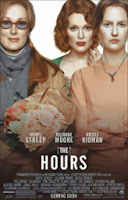
The Hours (movie)

Image
The Hours is a serious drama based on Michael Cunningham’s Pulitzer Prize–winning novel of the same name, itself inspired by Virginia Woolf’s Mrs Dalloway . The film opens with Woolf walking to the river in 1941, where she drowns herself. In 1923, Virginia Woolf (Nicole Kidman) is writing Mrs Dalloway while struggling with severe mental illness. In 1951 Los Angeles, a young housewife, Laura Brown (Julianne Moore), is reading Woolf’s novel and wrestling with the suffocating expectations of being a perfect wife and mother. In 2001 New York, Clarissa Vaughan (Meryl Streep) is preparing a party for her dear friend Richard, a poet who is dying of AIDS. The film weaves these three women’s lives together with remarkable sophistication. Laura tries to perform the role of the ideal wife and mother, yet she senses another self hidden beneath the surface. One day she leaves her son with a friend, checks into a hotel with Mrs Dalloway , and attempts suicide—but cannot go through with it. After ...

Kinosaki Onsen

Image
  “It would be nice to visit a hot spring in autumn, wouldn’t it?” I remembered my younger daughter saying that before. So last week, our family — including my elder daughter and her husband — went to Kinosaki Onsen in Hyogo Prefecture. The crab season had just begun on November 7 this year. The weather wasn’t great, but we enjoyed a sumptuous crab dinner at a comfortable ryokan , and of course, we relaxed in the famous hot spring.   The next day, after browsing some souvenir shops, we stopped by Nova , a coffee house near Kinosaki Onsen Station.   The coffee was excellent and the music created a pleasant atmosphere. I asked the owner’s wife what music was playing, and she showed us the CD jacket. It was LANDSCAPES by the Jan Lundgren Trio , a Swedish jazz group.   On our way home, we made a stop at Amanohashidate , known since ancient times as one of the Three Views of Japan. The name means “bridge to heaven.” I had been there twice before, but it was t...

Mrs Dalloway

Image
Mrs Dalloway is one of Virginia Woolf’s masterpieces and was first published in 1925. Many readers consider it one of the greatest novels of the twentieth century. The story follows a single June day in 1923 as Clarissa Dalloway prepares for her evening party in London. Woolf portrays the stream of consciousness of Clarissa and several other characters in long, fluid passages that move like flowing water. Because of this style, the novel can be challenging for English learners; I managed to read it by using the Japanese translation alongside the original. The novel opens with the famous line: “Mrs Dalloway said she would buy the flowers herself.” Peter Walsh, Clarissa’s old friend who has just returned from India, visits her and brings back memories of their youth. He once loved her, and there was also Sally, another close friend. Clarissa learned about sexuality and society through Sally, who awakened in her a youthful, almost romantic admiration. In the end, Clarissa refused P...

Tateshina with old friends, October 26

Image
Every year at the end of October, my mountain‑climbing friends hold a reunion. I don’t attend every time, but this year I felt I needed to go because I had been feeling depressed since late summer. About twenty years ago, more than forty people from all over Japan gathered at the Mawarime‑daira campsite at the foot of Mt. Kinpu. But this year, fewer than ten people joined. The reunion was held at Lodge Motive in the Pilatus Pension Village in the Tateshina Highlands. The beautiful autumn colors and long conversations with old friends truly lifted my spirits.   Lake Shirakaba

Kirigamine highland in Nagano

Image

The approach to Lodge Motive

Image
Lodge Motive is in the Pilatus Pension Village.

Tateshina highland in Nagano

Image

My American Journey

Image
My American Journey is Colin Powell’s autobiography, covering the years from his birth in 1937 to 1994, when he resigned as Chairman of the Joint Chiefs of Staff. Because of this time span, the book does not mention his later address to the UN Security Council, where he asserted that Iraq had developed mobile laboratories for producing biological weapons — a claim that later proved false and left him deeply humiliated. In my view, he should never have served under President George W. Bush alongside Dick Cheney and Donald Rumsfeld. Accepting the position of Secretary of State in the Bush administration was, I believe, the greatest mistake of his career. I do not know much about African American history or its many different backgrounds. Each individual has a distinct story. Condoleezza Rice is descended from enslaved Africans brought directly to America. President Obama is the son of a foreign student. Powell, by contrast, was the son of Jamaican immigrants. His parents came to the Un...

Dream

I had a strange dream last night. I found a small bird on a deserted path and caught it with my cap. When I held it in my hand, I saw it was a tiny black‑and‑white bird, small enough to rest easily in my palm. It struggled, and its movements pricked my fingers. After lingering on that strange sensation for a moment, I let the bird go and watched it fly back into the air.  

Depression

  I’ve been feeling depressed lately. I can’t sleep well, and I often wake up in the middle of the night feeling low. I’m distracted, unable to concentrate on reading, and I’ve even made mistakes at work. I’m not sure what I should do when I feel like this. I took a sleeping pill last night. I may not be able to update this blog for a while.

Sincerity

We’ve been suffering from record‑breaking heat across the country, not just in Osaka, with temperatures over 37°C every single day. Since we’re in the long Obon holidays now, I went jogging yesterday morning in a nearby park where I used to run. When I was younger, I could comfortably jog about 20 kilometers. But now I can manage only 10 kilometers, drinking tap water and cooling my head along the way. There were many joggers and walkers in the park early on, but as the temperature rose, the number of people gradually decreased. Because it was so hot, I wore a thin T‑shirt yesterday. As I had feared, I developed some solar photosensitivity symptoms on parts of my body. While jogging, I found myself thinking again about Kinshu: Autumn Brocade . In the novel, Aki and Yasuaki are able to confront their past and move beyond it because they are completely sincere—with each other and with themselves. I believe that sincerity is the most important element in a relationship with someone you lo...

Jogging in the summer

  I’m very busy, so I can’t go jogging every day. I usually jog in the late afternoon on weekends. During the dog days of summer, I have to wear a thick winter training shirt when I jog because I have solar photosensitivity. I developed alopecia years ago and received treatment at a hospital, and the medication caused the sensitivity. I stopped the treatment more than ten years ago, so the photosensitivity isn’t as severe now. The other day, I went jogging around 1:30 p.m. because the weather forecast said it would rain in the evening. The temperature was over 33 degrees Celsius, and it was extremely hot. I had a 500‑ml bottle of water with me, but even so, it felt like I was going to collapse from the heat. I usually jog at a slow pace, and sometimes I walk, so even people who walk fast often pass me. When I was younger, I liked jogging under the blazing summer sun. I used to call it “jogging to death.” I ran on a loop path in a park where I could drink tap water anytime. But now ...

Kinshu: Autumn Brocade

Image
Aki visits Zao to show the starlit sky to her handicapped son, and by chance she runs into her ex‑husband on the gondola. His worn, haggard appearance shocks her. Upset and confused, she exchanges only a few brief words with him. Two months later, Aki manages to find his address and writes him a letter. This becomes the beginning of their renewed correspondence. Aki was the only daughter of a father who owned a large construction company. She and Yasuaki had been classmates in college, and after graduation they married. Yasuaki was expected to become her father’s successor. But a year later, he became involved in a double‑suicide attempt at an inn in Kyoto. The woman, Yukako—his classmate from junior high school—died, and he survived. After the incident, he was deemed unfit to inherit the company, and the couple divorced with hardly a word between them. Aki remarried, but her second marriage brought little happiness. Her son was born with physical and intellectual disabilities, and he...

Under the Net

Image
You recently watched the film Iris on TV and found it fascinating. The movie portrays the later life of Iris Murdoch —the Irish‑born novelist and philosopher—focusing especially on her struggle with Alzheimer’s disease. It is based on the memoir written by her husband, John Bayley. Under the Net is Murdoch’s first novel. Its protagonist, Jake , is a writer who has produced very little original work and makes his living translating French novels. When his girlfriend decides to get married, Jake and his companion Finn—who is almost like Jake’s shadow—are thrown out of her house. Penniless and effectively homeless, Jake begins wandering through London in search of a place to stay. He visits old friends, but nothing goes well. Years earlier, Jake had published The Silencer , a philosophical dialogue based on conversations with Hugo , without telling him. Feeling guilty, he broke off their friendship. Now Hugo has become a wealthy and celebrated filmmaker. Jake sets out to find him, trav...

Saturday

Image
Saturday is Ian McEwan’s masterpiece, published in 2005. On one Saturday in February 2003, the protagonist, Henry Perowne—an accomplished neurosurgeon—wakes uneasily at four in the morning and sees a plane trailing fire as it approaches Heathrow. This opening scene foreshadows the unsettling day ahead. A massive anti–Iraq War demonstration is taking place that day. Trying to avoid the crowds, Perowne gets into a minor traffic accident with three thugs. He notices that Baxter, their leader, shows symptoms of Huntington’s disease, and he uses that knowledge to escape the situation. In doing so, he wounds Baxter’s pride. After playing squash with a colleague and visiting his demented mother, Perowne shops for dinner and returns home. His daughter Daisy argues with him about the Iraq War—she opposes it, while he opposes Saddam’s regime. Later, his father‑in‑law arrives for a family gathering, and soon after, Perowne’s son and wife come home. At that very moment, Baxter breaks into the ho...

Wedding

Image
I met my elder daughter’s boyfriend a year ago. At that time, they told me they wanted to have an overseas wedding, just the two of them. I told them that was perfectly fine. I didn’t ask him what he did for a living or what kind of education he had. After all, he is the one my daughter will marry, not me. I believe marriage is a personal matter, not something for the family or parents to decide. Since then, we’ve been calling him Ken‑chan . Ken‑chan may not know St. Augustine or Spinoza. He may not have read The Tale of the Heike or Natsume Soseki. But he is a good person, and I like him.   We drove together to Kansai International Airport in my car. Yumi, my younger daughter, arrived just in time. Tonight, the two of them departed for London for their wedding and honeymoon.

Katsura Imperial Villa (2)

Image
Katsura Imperial Villa was first constructed in 1615 by Prince Toshihito of the Hachijō family. He built the Koshōin, and later his son, Prince Toshitada, continued the project by adding the Chūshōin, Shingoten, Gepparō, Shōkintei, Shōkatei, and Shōiken. There is no definitive evidence that Kobori Enshū (1579–1647) was directly involved in designing the garden, though he is believed to have offered advice to the Hachijō family. The villa as we see it today was completed in 1662. Cycad at Sotokoshikake   Sotokoshikake is a small waiting hut where guests once sat while the host prepared tea. Cycads were planted here, creating a distinctive atmosphere. It may be a matter of taste, but this spot feels like a unique microcosm unlike any other place in the villa. Suhama / Sea and a lighthouse   After passing Sotokoshikake, we walked along the edge of the pond and arrived at Shōkintei, the most important tea hut in the villa. The blue‑and‑white checkered sliding doors ( fu...

the Last Lunch

Image
It’s always hard to coordinate everyone’s schedules, and even though today is a weekday, it was probably our last chance to have lunch together.   We went to a Japanese restaurant to celebrate my daughters’ birthdays and my elder daughter’s wedding. It may have been the last family lunch we’ll have for a while.     The hospitality at the restaurant was excellent.

Katsura Imperial Villa (1)

Image
Katsura Imperial Villa is strictly preserved by the Imperial Household Agency, so we need the permission and have to wait for a long time. I applied at the beginning of February. I visited there with my wife yesterday.  the Katsura River riverside road around the Entrance   Katsura Imperial Villa is located at the south end of Kyoto City, alongside of the Katsura River. It was going to rain, but we didn't need our umbrellas when we arrived there. We entered the gate and showed our permit and drivers licenses. More than 30 visitors, including some foreigners, came at that time. A curator who was a middle-aged man guided and gave us an explanation with Kansai accent and comical talk.   Main Gate from the inside  At the Miyukimon, it suddenly began to rain hard. The curator comforted us that we were lucky because the moss looked most beautifully on the rainy day.  

hug

Image
We don’t really have a habit of hugging in Japan. I’ve never hugged my wife as a routine, and I can’t even remember walking with my arm around her waist. Mostly because it just makes walking difficult. A couple of years ago, I said something to my wife that upset my elder daughter, and she didn’t speak to me for about a week. One night, she came home late and drunk, and suddenly hugged me while crying. She said, “Dad, I love you, I love you… I’m sorry for rebelling against you… Please wash the dishes yourself. I feel sorry for Mom…” I was a little embarrassed. But ever since then, I’ve washed the dishes after dinner. We had gone through some difficult years since she was a teenager, and she lived on her own for a while. I remember going to see a circus with her back then and talking about life. After she moved back home, I received a letter from her on my birthday a few years ago. In it, she apologized for how she had behaved when she was younger. I’ve carried that letter in my wor...

Wakayama Castle (2)

Image
I went to Wakayama City for business this morning. After finishing my work, I bought a boxed lunch at a convenience store and visited Wakayama Castle again. The weather was beautiful—cool in the shade but hot under the sun.  The Castle Tower and Ohashi Roka  Momijidani Garden inside the castle grounds was lovely. This is the Ohashi Roka, the covered bridge passage. You can go inside for free, but the floor is a bit slippery, so walking through it feels a little uneasy. inside the Ohashi Roka The Ohashi Roka leads to Engyokaku, the floating pavilion on the pond. It must be even more beautiful in autumn when the leaves change color.   Engyokaku Koshoan  At Engyokaku, you can enjoy a cup of Japanese tea even if you don’t know the formal tea ceremony manners.  

The Reader

Image
The author of this book is Bernhard Schlink, and the original was written in German. I read it in English. One day in post‑war Germany, Michael, a fifteen‑year‑old boy, suddenly becomes ill on his way home. A beautiful woman named Hanna, thirty‑five and living alone, helps him. After he recovers from hepatitis, he visits her apartment to thank her. From there, they become lovers. Reading aloud to Hanna soon becomes a strange but intimate part of their relationship. Then, without warning, she disappears. A few years later, Michael sees her again by chance. Now a law student, he attends a trial of former Nazis charged with war crimes—and Hanna is one of the defendants. She had served in the Waffen‑SS as a guard at a concentration camp. During the trial, she is treated as the person chiefly responsible for a horrific incident, and she reluctantly accepts this role. She does so because she wants to hide her secret. To protect it, she receives a life sentence. For Hanna, preserving her dig...

Crazy Hashimoto

Toru Hashimoto, the Mayor of Osaka and co‑leader of the Japan Restoration Party, remarked that the so‑called “comfort women” were necessary for Japanese soldiers during World War II. When I heard his comment, I felt ashamed as a Japanese citizen. He completely fails to grasp the essence of the issue.

Bird Watching (3)

Image
Most of the wild ducks in the pond have already migrated north. Only a few people were out jogging or walking early in the morning, so Tonboike Park was very quiet. I was able to enjoy listening to the birds singing.   Hoojiro / Meadow Bunting   On my way back to the parking lot, I spotted a large, beautiful bird and followed it. But just as I pointed my camera at it, it disappeared.

Writing English

Image
It has been four months since I began this blog. In the beginning, I often wondered whether my English was correct. Although I’ve managed to write every post in English, I can’t say my English has improved much. For many Japanese learners, articles and prepositions are particularly challenging, largely because they don’t exist in the same way in Japanese.    My younger daughter took this photo in Shanghai. The Japanese on the sign is a little odd, but perhaps it’s still better than my English. Writing in English can be frustrating. Yet at the same time, I sometimes feel an indescribable sense of freedom—as if, by writing in English, I’m momentarily released from the Japanese language and culture that shaped me for so many years.  

Dawkins Scale

Image
    I hesitate to call it a book; it’s more like a spectrum. In it, Richard Dawkins lays out seven milestones ranging from a fully committed theist to a fully committed atheist — a progression now known as the Dawkins Scale . 1. Strong theist. 100 per cent probability of God. In the words of C.G. Jung: "I do not believe, I know." 2. De facto theist. Very high probability but short of 100 per cent. "I don't know for certain, but I strongly believe in God and live my life on the assumption that he is there." 3. Leaning towards theism. Higher than 50 per cent but not very high. "I am very uncertain, but I am inclined to believe in God." 4. Completely impartial. Exactly 50 per cent. "God's existence and non-existence are exactly equiprobable." 5. Leaning towards atheism. Lower than 50 per cent but not very low. "I do not know whether God exists but I'm inclined to be skeptical." 6. De facto atheist. Very lo...

Consilience

Image
Edward O. Wilson is widely respected as a leading researcher on ants, biology, and biodiversity. He is also known as an ecologist and the father of sociobiology. I haven’t read Sociobiology , but I have read several of his other books— On Human Nature , Biophilia , and Naturalist . This book is difficult to read in a second language, but it is worth the effort, even if it takes time. At the beginning, reflecting on Einstein’s attempt to unify the physics of the micro and the macro, Wilson writes:   I found it a wonderful feeling not just to taste the unification metaphysics but also to be released from the confinement of fundamentalist religion. ・・・ science is religion liberated and writ large. ・・・Preferring a search for objective reality over revelation is another way of satisfying religious hunger.  (Chapter 1)   These words remind me of Spinoza . Later he writes: The greatest enterprise of the mind has always been and always will be the attempted linkage of the scienc...

SAVING 10,000 - Winning a War on Suicide in Japan

Image
  My friend recommended this video to me yesterday. Over the past ten years, 300,000 people in Japan have taken their own lives. Japan’s suicide rate is twice that of the United States, three times that of Thailand, nine times that of Greece, and twelve times that of the Philippines. As far as I know, two of my classmates from elementary school and two from junior high school died by suicide when they were around twenty. I never learned the reasons. Another friend took his life at the age of twenty‑eight, and in his case it was said to be because of a relationship problem.   

Tuesdays with Morrie

Image
ALS, amyotrophic lateral sclerosis, is a progressive neurodegenerative disease that affects nerve cells in the brain and the spinal cord. It is also known as "Lou Gehrig's Disease". This is an incurable disease for now. ALS has affected many famous people including Lou Gehrig, Stephen Hawking, Mao Zedong, and also Torao Tokuda, Hideo Shinozawa in Japan. There are more than 8,000 patients in Japan. By the end, if you are still alive, you are breathing through a tube in a hole in your throat, while your soul, perfectly awake, is imprisoned inside a limp husk, perhaps able to blink, or cluck a tongue, like something from a science fiction movie, the man frozen inside his own flesh. This takes no more than five years from the day you contract the disease. (page 10 in this book) One day, Mitch Albom happens to know it on a TV news show, that his mentor, Morrie Schwartz, contracted ALS and is dying. He decided to pay a visit soon. They meet for the first time in sixteen...

Osaka Castle

Image
Osaka Castle is one of the most famous castles in Japan. This was the site of Ishiyama-Hongan-ji Temple which was the toughest forces of resistance against Hideyoshi. After the overthrowing them, Toyotomi Hideyoshi ruled over the country and began to construct this castle in 1583, placed the headquarter of his administration here. Hideyoshi died in 1598. After the Battle of Sekigahara, Tokugawa Ieyasu took over the rule in 1603. In the Summer Campaign of the Siege of Osaka, Yodogimi, the second wife of Hideyoshi, and the successor Hideyori suicided in here. Toyotomi family perished in 1615. Tokugawa Shogunate was functioned this castle as the core of the control of the western Japan and Osaka until 1868. In 1935, the castle was rebuilt. Now the Osaka Castle Park is the largest park and the most popular tourist spot in the city. I visited here yesterday. Due to the cherry blossom viewing, a lot of people, not only Japanese but also foreigne...