The Unlikely Pilgrimage of Harold Fry
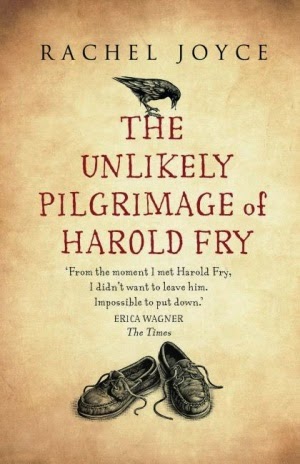
The Unlikely Pilgrimage of Harold Fry, published in 2012 and long-listed for the Man Booker Prize that same year, is the debut novel of Rachel Joyce, who had spent twenty years writing plays for BBC Radio 4.
Harold Fry, sixty‑five, is a retired brewery salesman living on his pension with his wife, Maureen. His childhood was unhappy, and his naturally introverted character has kept him at a distance from other people. His marriage to Maureen has long since grown cold.
One morning, Harold receives a letter from Queenie Hennessy, a former colleague he has not seen in twenty years. She writes to tell him that she is dying of cancer in a hospice in Berwick‑upon‑Tweed. Harold writes a reply, but immediately feels that a letter cannot possibly express what he wants to say. He leaves the house intending to post it, but hesitates—and keeps walking to the next postbox, and then the next.
At a petrol station, he stops for something to eat and tells a young waitress about Queenie. She mentions her aunt, who recovered from cancer through faith. Her words strike Harold deeply, and on impulse he decides to walk all the way to the hospice to deliver his letter in person. He sets out with no preparation, convinced that his journey—nearly a thousand kilometers from Kings-bridge to Berwick‑upon‑Tweed—will somehow give Queenie the strength to keep living.
As he walks, the English countryside unfolds in vivid detail, full of flowers, trees, and chance encounters with strangers. Before long, the media discover his story, and Harold unexpectedly becomes a national sensation. Crowds begin joining him, turning his solitary pilgrimage into something loud and public—completely at odds with his intention. Eventually, Harold leaves the group behind and continues alone. When he finally reaches Berwick, no one notices him; he looks like nothing more than a vagrant.
In the final chapters, we learn the truth about his son David, Maureen’s long‑kept secret, and the real reason for Queenie’s disappearance twenty years earlier. Harold’s reunion with Queenie is harsh and heartbreaking, yet the novel closes with a sense of quiet consolation.
Though the story may seem improbable or even fable‑like, it is ultimately a tale of redemption—for people who carry heavy burdens through life.


Dear Hiroshi-sama,
ReplyDeleteThank you for letting us know of this rather new work. It sounds very interesting to me and I shall write down the title as one of the books I may purchase in the future. I like the pilgrimage theme. It reminds us Japanese of 'Ohenrosan' and all those trips to famous temples and shrines. It is particularly close to my heart as I am very interested in medieval pilgrimages in the west and read quite a few books about the topic.
Thank you for leaving your message, Yoshi-san.
DeleteWe often take on a burden in our lives, and are inspired by the word 'pilgrimage.
When I was 25 years old, I made a pilgrimage to 88 temples on Shikoku Island (Ohenro) alone by bicycle with camping gear.
Enjoy this book!
I visited your nice blog. I guess you are the same generation as me. I'll sometimes visit your blog.